Dairy Farm in Rønne
Rønne, Denmark
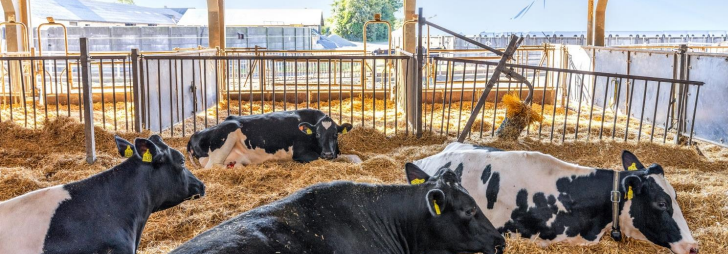
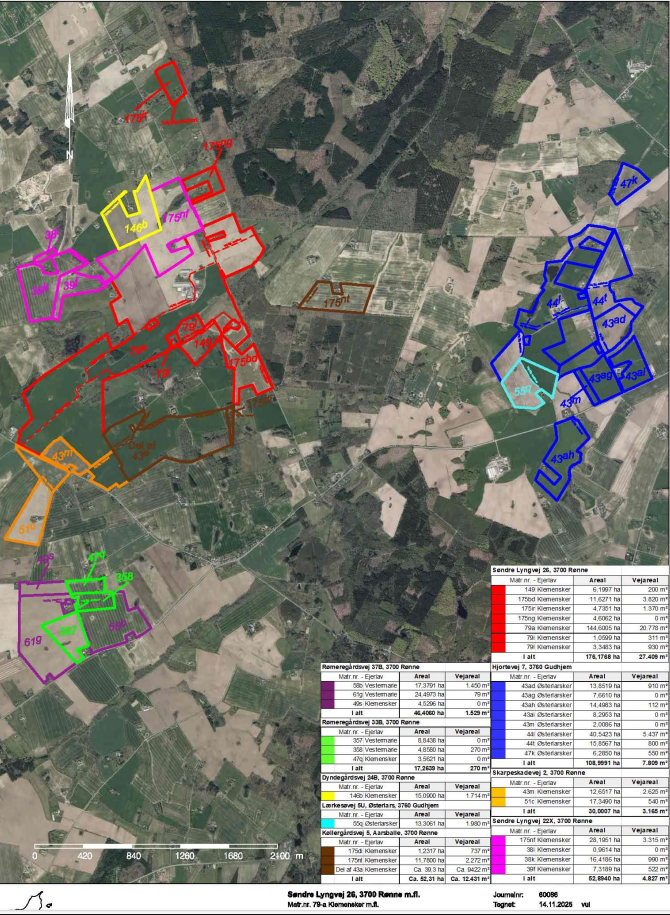
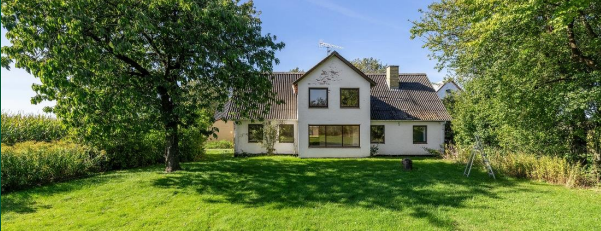
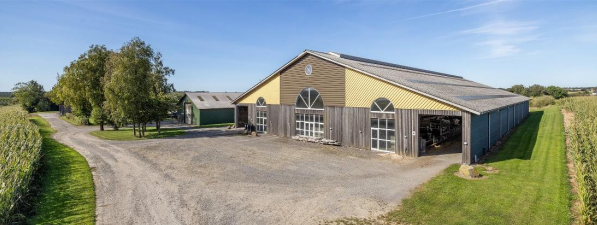
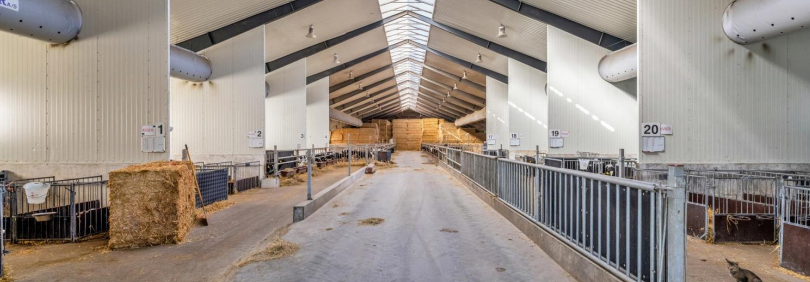
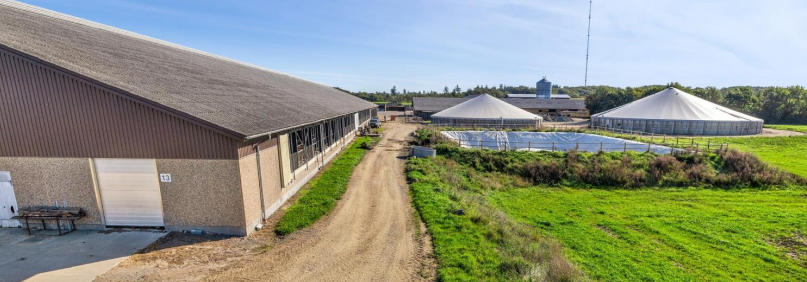
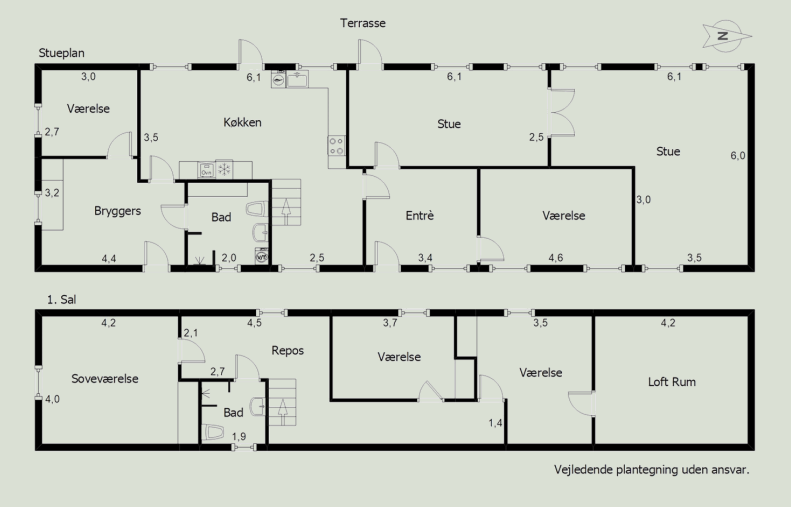

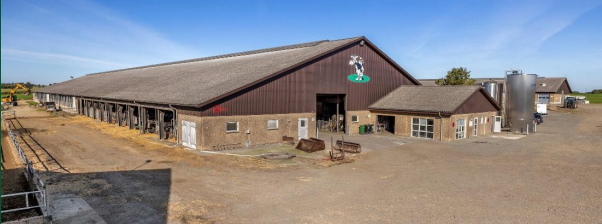

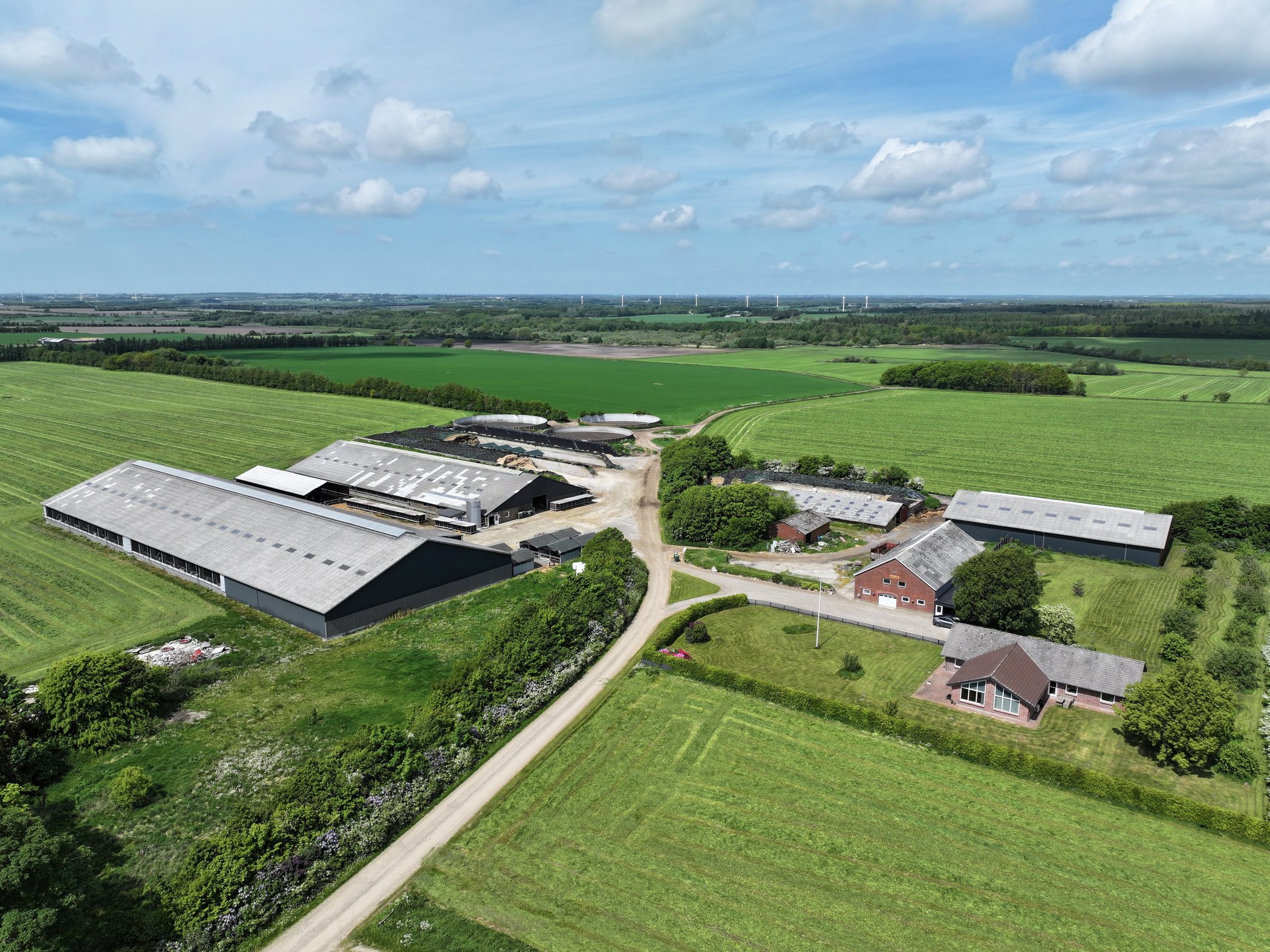
This modern dairy farm, located at Søndre Lyngvej 26 in Rønne, covers a total area of approximately 512.7 hectares, of which about 459 hectares are arable land. The farm has a barn capacity for around 600 dairy cows plus young stock.
Characteristics
Characteristics
Description
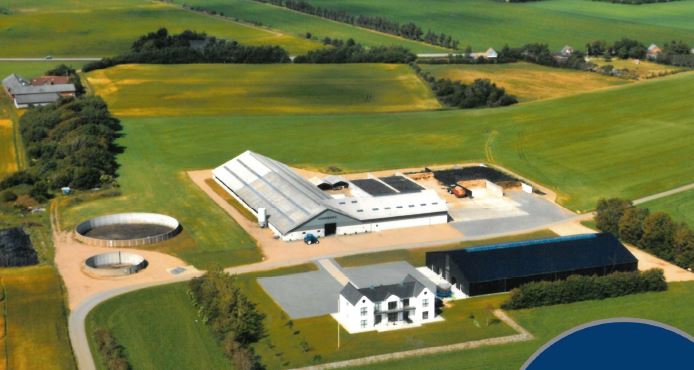
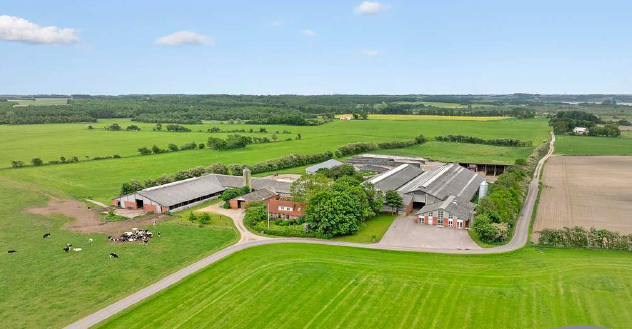
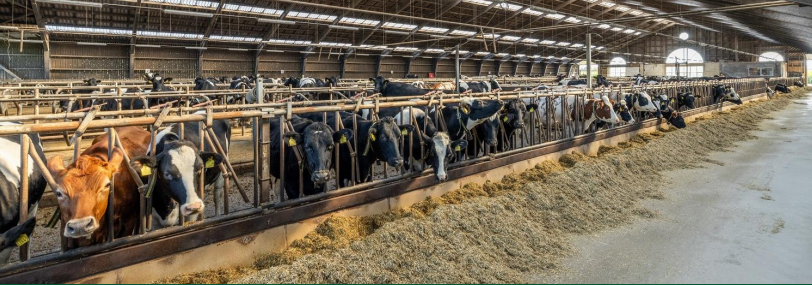
This modern dairy farm, located at Søndre Lyngvej 26 in Rønne, covers a total land area of approximately 512.7 hectares, of which about 459 hectares are arable land. The farm has a barn capacity for around 600 dairy cows plus young stock, with advanced milking facilities (DeLaval 2x24 milking parlor), spacious calf and young stock barns, and a slurry capacity of 12,100 m³. The residential house is 185 m², modern and well maintained, with two additional houses of 109 m² and 200 m² respectively.
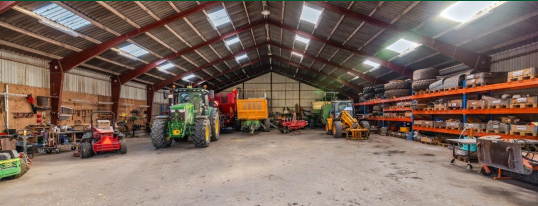
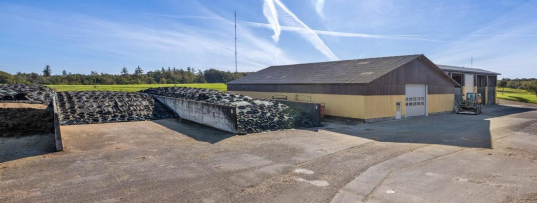
The farm buildings are functional and well maintained, including various barns, storage rooms, silos, and slurry storage. There is an extensive and well-maintained machinery fleet, as well as IT equipment and programs for the business. The roughage stock will be inventoried and settled at the current price upon transfer.
The livestock consists of approximately 607 cows/heifers older than 2 years, 248 heifers aged 1-2 years, 276 heifers aged 0-1 year, and 11 young bulls. The total value of the livestock is estimated at 16 million DKK. The average milk production per cow is 11,325 kg per year.
The farm offers excellent hunting opportunities on its own grounds, with a rich population of game. The land is well organized and of high quality (mainly JB 5). Various environmental and production permits are in place, and the buyer takes over the right to apply for EU subsidies according to current regulations.
The total purchase price is 140 million DKK (approx. €18.8 million), divided over real estate, machinery, inventory, livestock, and stocks. The buyer is advised to seek their own tax advice regarding the possibilities and distribution of the purchase price.
Summary
Location: Søndre Lyngvej 26, 3700 Rønne, Bornholm, Denmark
Area: approx. 512.7 ha (of which approx. 459 ha arable land)
Barn capacity: approx. 600 dairy cows + young stock, modern milking parlor
Houses: Main house (185 m²), 2 additional houses (109 m² and 200 m²)
Farm buildings: Various barns, silos, storage rooms, slurry storage
Machinery fleet: Extensive and well maintained
Livestock: 607 cows/heifers >2 years, 248 heifers 1-2 years, 276 heifers 0-1 year, 11 young bulls
Milk production: Average 11,325 kg per cow per year
Hunting opportunities: Excellent, abundant game on own grounds
Permits: Environmental and production permits in place
EU subsidy: Buyer takes over right to apply
Purchase price: 140 million DKK (approx. €18.8 million), divided over real estate, machinery, livestock, and stocks
We strive to contact you within 48 hours.
Denmark
Denmark is a country located in Northern Europe. It occupies most of the Jutland Peninsula and several islands, including Zealand, Funen, Lolland, Falster, and Bornholm. Denmark borders Germany to the south and is surrounded by the North Sea to the west and the Baltic Sea to the east.
Population
With an estimated population of approximately 5.8 million people, Denmark is one of the smaller countries in Europe in terms of population size. The capital and largest city of Denmark is Copenhagen, located on the island of Zealand, and it has about one and a half million inhabitants. The population of Denmark is generally very prosperous and enjoys a high standard of living. Currently, over 80% of the population lives in cities, and this number is expected to increase due to industrial growth. Most Dutch agricultural families live on the Jutland Peninsula. The Danes have a positive attitude toward the Dutch, especially because they integrate well.
Currency
The official currency of Denmark is the Danish krone (DKK). One krone is divided into one hundred øre. The Danish krone is used for all financial transactions in the country, and its exchange rate against other currencies is determined by financial markets.
Social affairs
Denmark is renowned for its comprehensive social security system, which focuses on the well-being of all citizens. The social system includes social assistance, healthcare, unemployment benefits, elderly care, and educational support. This extensive system contributes to equality and social cohesion in Danish society.
Education
The education system in Denmark is of high quality and offers equal opportunities for all children. It is based on a combination of public and private schools, with public schools being free and private schools often providing additional educational offerings. The education system includes preschool, primary school, secondary education, and higher education, with options for both academic and vocational training.